
Roof Waterproofing: Methods and Solutions
The roof is every building's first line of defense against the elements. Rain, snow, UV rays, and temperature fluctuations constantly test roofing, causing leaks, deterioration, and structural damage over time.
Effective roof waterproofing is therefore essential not only to protect the interior spaces, but also to ensure the durability of the building and reduce long-term maintenance costs.
In this article we explore the main methods and solutions for waterproofing roofs, analyzing techniques, materials, and advantages of each, to help you choose the solution best suited to your needs.
Why roof waterproofing is essential
Even a small water leak can cause significant and costly damage: damp stains, peeling plaster, corrosion of metal structures, mold growth, and loss of thermal insulation.
A system of roof waterproofing well designed and crafted it serves to:
- prevent the entry of rainwater;
- protect the load-bearing structure and insulating layers;
- maintain a constant internal temperature;
- reduce maintenance interventions;
- increase the value and lifespan of the building.
Furthermore, correct waterproofing contributes to living comfort and energy sustainability, reducing dispersion and consumption.
Types of roofs and their waterproofing needs
Not all roofs are the same, and consequently, neither are waterproofing methods.
The main types of coverage are:
| Roof type | Characteristics | Recommended waterproofing solution |
|---|---|---|
| Flat roof | Horizontal surface, exposed to stagnant water | Liquid or bituminous membranes, elastomeric sheaths, nanotechnological systems |
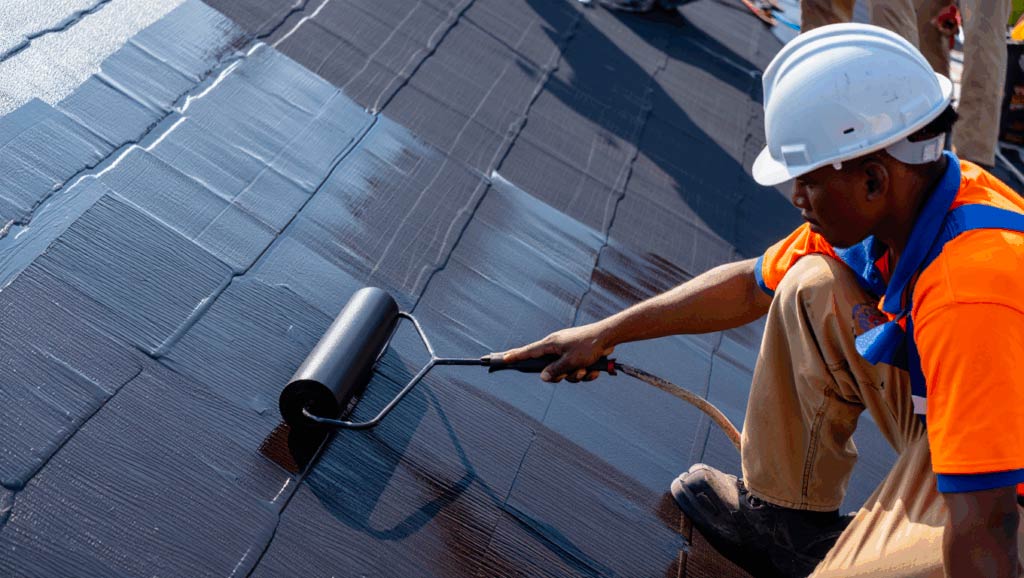
| Sloping roof | It promotes the flow of rainwater | Waterproof tiles, under-tile membranes, protective paints |
| Green roof | Covered by vegetation and soil | Root barriers, reinforced waterproof membranes |
| Metal roofing | Made of sheet metal or steel, subject to thermal expansion | High adhesion liquid elastic coatings |
This distinction is fundamental for selecting the best performing and most durable system.
Main methods of roof waterproofing
1. Bituminous membranes
They are among the most used solutions for flat roofs and terraces.
The bituminous membranes They are applied hot using a flame or specific adhesives and create a continuous waterproof layer.
Advantages:
- high mechanical resistance;
- good durability over time;
- low costs.
Limits:
- sensitive to UV rays if not protected by surface layers;
- difficult to repair in case of localized damage.
2. Liquid waterproofing
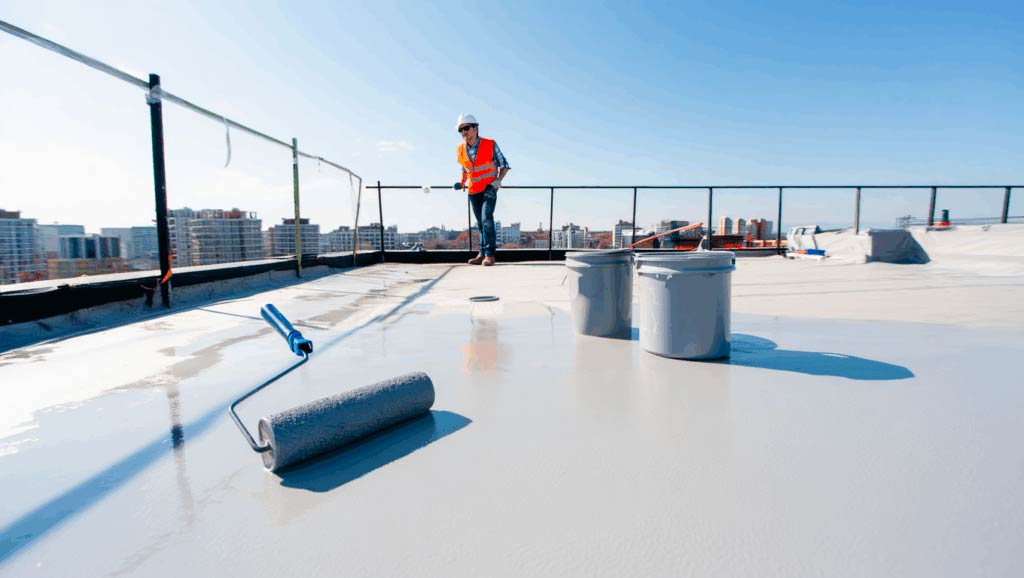
These are liquid resins or sheaths applied coldly using a roller, brush, or spray, which, once dry, form an elastic, waterproof film.
Ideal for:
- roofs with complex geometries;
- roofs with architectural details that are difficult to seal;
- renovation work without demolition.
Main advantages:
- quick and seamless application;
- high elasticity;
- excellent adhesion to various substrates (concrete, metal, wood, ceramic).
The nanotechnological liquid sheaths like those used by Gigaterm, today represent the evolution of this technique, thanks to their ability to create breathable but waterproof barriers and their extreme resistance to atmospheric agents.
3. Waterproofing with synthetic membranes
Made of PVC, EPDM or TPO, these membranes are heat welded or mechanically fixed to the structure.
Pros:
- long-lasting (even over 25 years);
- resistance to thermal shock and UV rays;
- low maintenance.
Against:
- complex installation, to be entrusted to specialized personnel;
- higher initial cost than other solutions.
4. Waterproofing with acrylic and polyurethane coatings
They are single-component liquid products which, once dried, form a continuous protective layer.
Ideal for metal roofs or surfaces exposed to direct sunlight.
Strengths:
- excellent adhesion;
- UV reflectivity (“cool roof” effect);
- flexibility even at low temperatures.
How to choose the most suitable solution
The choice of waterproofing method depends on several factors:
| Factor to consider | Influence on choice |
|---|---|
| Type of coverage | Determine the most suitable material |
| Climate conditions | They affect elasticity and resistance to UV rays |
| Budget available | Some solutions have higher initial costs but longer lifespan |
| Surface condition | If it is damaged or already waterproofed, a complete re-do may be necessary |
| Expected duration of the intervention | Nanotechnology solutions ensure a longer useful life |
A technical inspection is always recommended to evaluate the most effective type of intervention.
Maintenance and durability over time
Even the best waterproofing system requires periodic maintenance.
An annual check-up allows you to:
- identify any cracks or lifting;
- check the tightness of joints and critical points (chimneys, skylights, drains);
- clean the surface of leaves and debris;
- prevent infiltrations before they become serious damage.
With regular maintenance, the lifespan of quality waterproofing can exceed 20 years.
Conclusions
Roof waterproofing is not a simple technical intervention, but an investment in safety, efficiency and longevity of the building.
From the choice of material to the quality of installation, every detail affects the final result.
Opting for modern technologies such as water-based nanotechnology liquid sheaths, such as those proposed by Gigaterm, means choosing long-lasting, eco-friendly and high-performance protection.
Relying on qualified professionals is the key to avoiding leaks, structural damage, and future expenses, ensuring a safe and durable roof for many years.
FAQ
How long does roof waterproofing last?
The duration depends on the type of material and the quality of the installation. On average, a well-made system can last from 10 to 25 years old. The solutions water-based nanotechnology, such as those offered by Gigaterm, guarantee long-lasting performance and reduced maintenance requirements.
Is it possible to waterproof a roof without removing the old sheathing?
Yes, in many cases it is possible to intervene without demolitions, applying liquid coatings or nanotechnological membranes directly over the old surface. This technique reduces time, costs, and environmental impact.
What is the best material for waterproofing a roof?
There is no “universal” material: the choice depends on the type of roofing and the climatic conditions. However, the nanotechnological coatings today offer an optimal balance between elasticity, breathability and weather resistance, making them ideal for both flat and pitched roofs.

Gigaterm is a leading company in the development, production, and installation of water-based nanotechnology coatings, designed to offer innovative, sustainable, and high-performance solutions.
 English
  Italian