
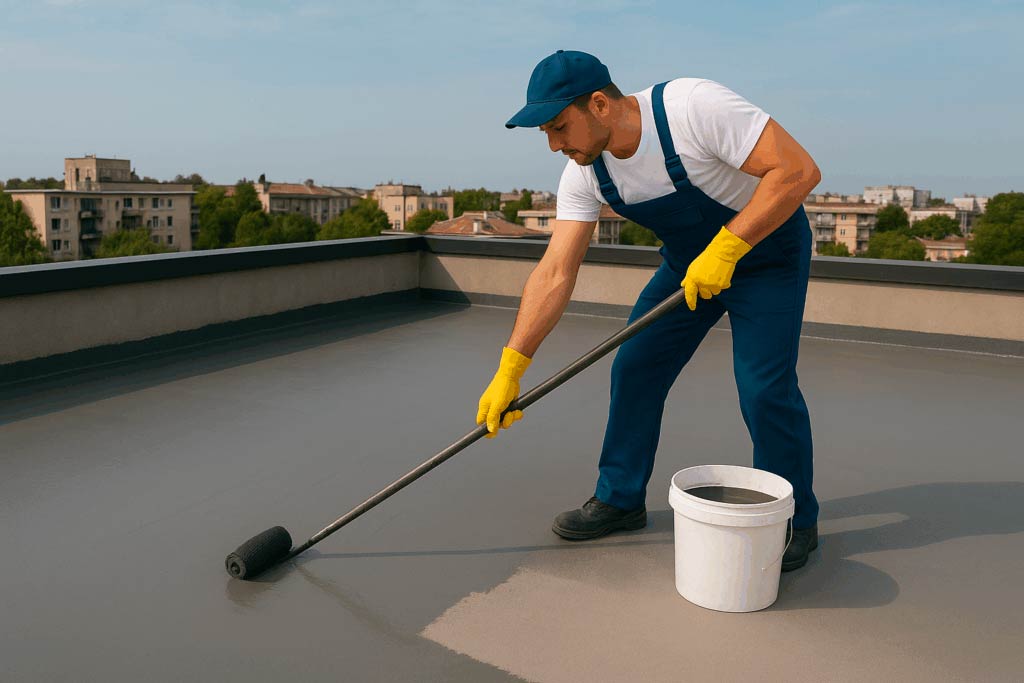
Liquid Waterproofing: A Complete Guide
Leaks, moisture, and structural damage are common problems for terraces, roofs, and exposed surfaces. The solution?’waterproofing with liquid sheath, a modern, effective, and versatile technique that guarantees long-term protection. In this article, we'll guide you through the advantages, applications, and technical features of this solution. Read on to make an informed choice about the best waterproofing system for your building.
What is liquid waterproofing membrane?
Liquid membrane is a continuous coating that, once applied, creates a flexible and waterproof membrane. It comes in a fluid form and is applied directly to the surface, adapting perfectly to any irregularities in the substrate. It can be water-based (more eco-friendly and safe), solvent-based, or with specific formulations for extreme environmental conditions.
The more modern versions also guarantee properties breathable, UV resistance and a good one adhesion on different materials (cement, brick, tiles, etc.).
Advantages of liquid waterproofing
1. Absence of joints
One of the main strengths of this technology is the creation of a continuous surface, without joints or overlaps, which are often weak points in traditional waterproofing systems. This dramatically reduces the risk of infiltration.
2. Flexibility and elasticity
Modern liquid sheaths are formulated to be elastic and resistant to thermal expansion. This means they won't crack or break with temperature changes, making them ideal even for climates subject to significant temperature fluctuations.
3. Ease of application
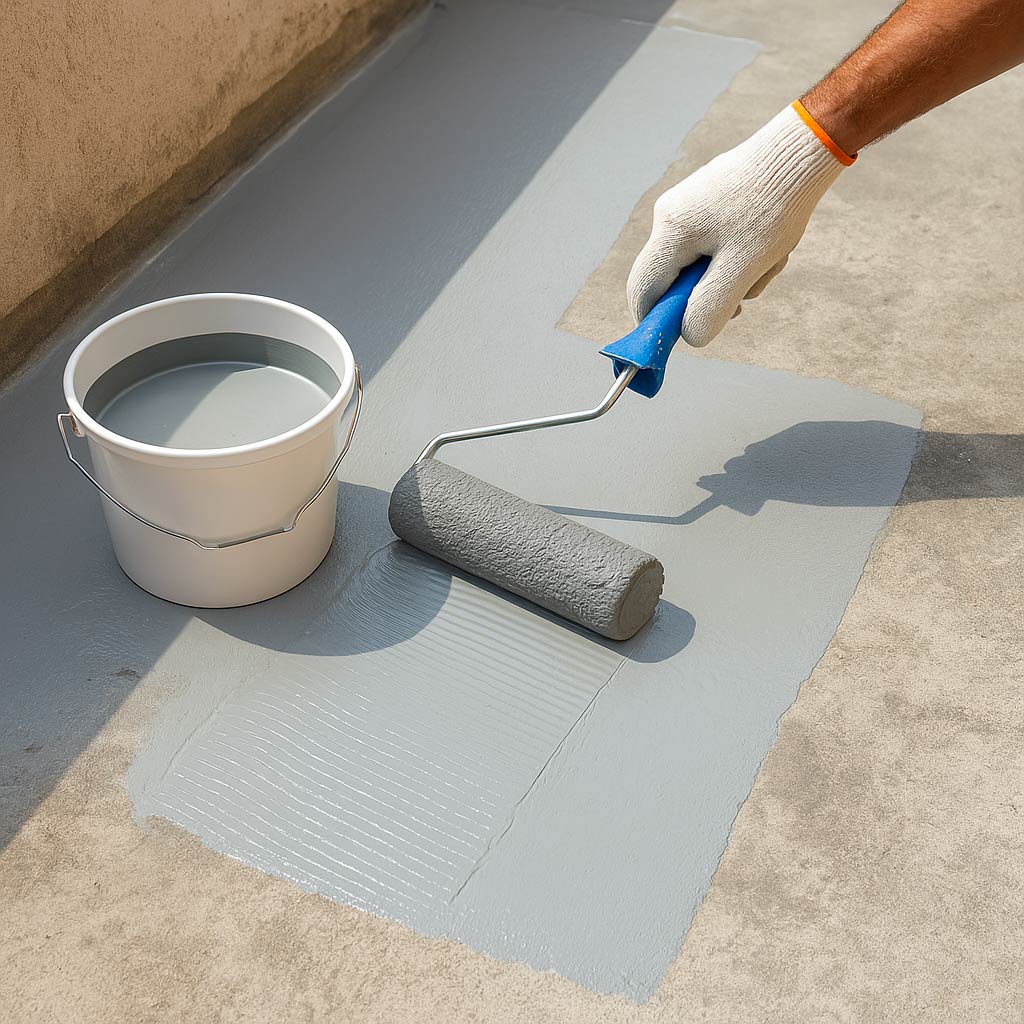
Application is simple and can be done with a roller, brush, or airless sprayer. Quick application reduces application time and costs, allowing for use on complex or hard-to-reach surfaces.
4. Adhesion on multiple supports
There liquid sheath It adapts easily to a wide variety of surfaces: concrete, tiles, metal, wood, bricks, old coverings. In many cases, it is possible apply it directly on the existing coating, avoiding demolitions.
5. Simple maintenance
Once applied correctly, the liquid sheath has a long life and requires minimal maintenance, maintaining its waterproofing properties intact over time.
Where is the liquid sheath applied?
1. Terraces and roofs
It is the most common application. The liquid waterproofing sheath It is laid over the entire walkable surface, protecting from rain and standing water. It is also often used under flooring in double-layer systems.
2. Balconies
Its high adhesion makes it ideal even for small or medium-sized balconies. In some cases, it can be finished with non-slip resins or colored finishes.
3. Foundations and retaining walls
Bituminous or polymer-based liquid membranes are ideal for protecting underground walls from rising damp or groundwater infiltration.
4. Industrial roofing
In the industrial sector, the liquid waterproofing sheath It is often chosen for its chemical and mechanical resistance, especially for metal or prefabricated concrete roofs.
5. Flat or pitched roofs
Thanks to its adaptability, the liquid membrane can also be applied on pitched roofs, ensuring complete protection.
Types of liquid sheath
Formulations vary depending on use and environmental conditions:
- Acrylics: suitable for temperate climates, they have good breathability.
- Polyurethanes: high mechanical performance, ideal for walkable surfaces.
- Bituminous: excellent for foundations and retaining walls.
- Hybrid or silanic: combine the advantages of previous formulations.
Choosing the right type depends on the intended use, from the climatic conditions and the type of support.
Preparation of the substrate and installation
An effective pose starts from correct preparation of the base:
- Thorough cleaning of the surface.
- Membership Verification (primer if necessary).
- Laying out the sheath in two or more hands, respecting the drying times between one coat and the next.
- Possible reinforcement with fiber mesh at critical points (joints, corners, drains).
Correct application guarantees long-lasting hold and a professional result.
When is it best to intervene?
The ideal season for the intervention is the spring or early autumn, when temperatures are moderate and stable. It is important avoid application when rain is imminent, high humidity or under direct sun during the hottest hours.
Conclusions
Thewaterproofing with liquid sheath It represents one of the most effective, flexible, and economical solutions for protecting horizontal and vertical surfaces from infiltrations and moisture damage. Thanks to its versatility, it is suitable for numerous building contexts, both residential and industrial. Trust professionals like Gigaterm, which use cutting-edge products and proven techniques, is the best choice to guarantee a long-lasting, quality result.
Frequently Asked Questions
Can the liquid membrane be applied to a surface that is already tiled?
Yes, many modern liquid membranes adhere perfectly even to tiled surfaces, as long as they are clean and stable. In some cases, it may be necessary to apply a primer to improve adhesion.
How long does a liquid sheath last?
When applied correctly and with quality products, a liquid membrane can provide effective waterproofing for over 10 years. Durability depends on factors such as sun exposure, substrate type, and maintenance.
Is it possible to walk on a surface waterproofed with liquid sheathing?
It depends on the type of product. Some membranes are walkable and ideal for terraces and balconies, while others require protection with flooring. It's important to choose the right formulation for your intended use.

Gigaterm is a leading company in the development, production and installation of water-based nanotechnology coatings, designed to offer innovative, sustainable and high-performance solutions.
 English
  Italian