

Effective terrace waterproofing
A terrace is often considered an added value for a home or condominium: an outdoor space to enjoy, but also an area exposed to heavy stress. Rain, frost, sunlight, and temperature fluctuations put a strain on the surface and, if unprotected, can cause structural damage and residential discomfort. A'’waterproofing of effective terraces It's therefore not an option, but a necessity to avoid leaks, mold, and high repair costs. In this article, we'll guide you through the risks and the most effective solutions, with a practical and effective approach.
Why Waterproofing is Crucial
An unprotected terrace becomes a building's weak point. Leaks not only compromise living comfort, but also generate unexpected and difficult-to-manage expenses.
Most common problems:
- Water infiltration which flow into the rooms below, causing unsightly stains and damage to the plaster.
- Mold and moisture formation with negative consequences on health and air quality.
- Progressive degradation of materials, with detachment of tiles and cracks in the flooring.
- Increased maintenance costs, because every late intervention becomes more complex and expensive.
The solution: adopt a continuous and resistant waterproofing system that eliminates the typical vulnerable points of terraces.
The main solutions compared
Not all waterproofing is the same. Let's look at the most common techniques and how they meet the practical needs of those who need to protect their terrace.
Bituminous sheath
- Advantages: economical and traditional.
- Limits: presence of joints that become weak points; application with a gas flame (less safe).
- Who is it suitable for: small, low-cost interventions.
- Risk: frequent maintenance and limited lifespan (10-15 years).
Synthetic membranes (PVC, TPO)
- Advantages: UV resistant, lightweight and flexible.
- Limits: complex application, requiring heat-welded joints.
- Who is it suitable for: large-scale coverage with highly specialized personnel.
- Risk: If the application is not perfect, the welds can become vulnerable.
Nanotechnological liquid sheath
- Advantages: Easy application by roller or spray, continuous layer without joints, very high resistance to atmospheric agents and thermal expansion.
- Solution to difficulties:
- Eliminates infiltrations because there are no joints.
- It blocks humidity and therefore the formation of mould.
- It protects materials from degradation thanks to its elasticity.
- It reduces long-term costs, because it lasts over 20 years with very little maintenance.
- Who is it suitable for: both private individuals and condominium administrators looking for a definitive solution.
How to prevent mold, leaks, and deterioration
The real challenge for terrace owners is not just waterproofing, but doing so in a way that prevents the problem from recurring within a few years.
- Block the water at the source → a continuous waterproof coating prevents infiltration into the lower layers.
- Manage wastewater correctly → ducts and drains must be carefully protected.
- Protect existing materials → the liquid sheath forms an elastic barrier that follows structural movements without cracking.
- Counteract the formation of mold → by keeping the surface dry, the breeding ground for spores is eliminated.
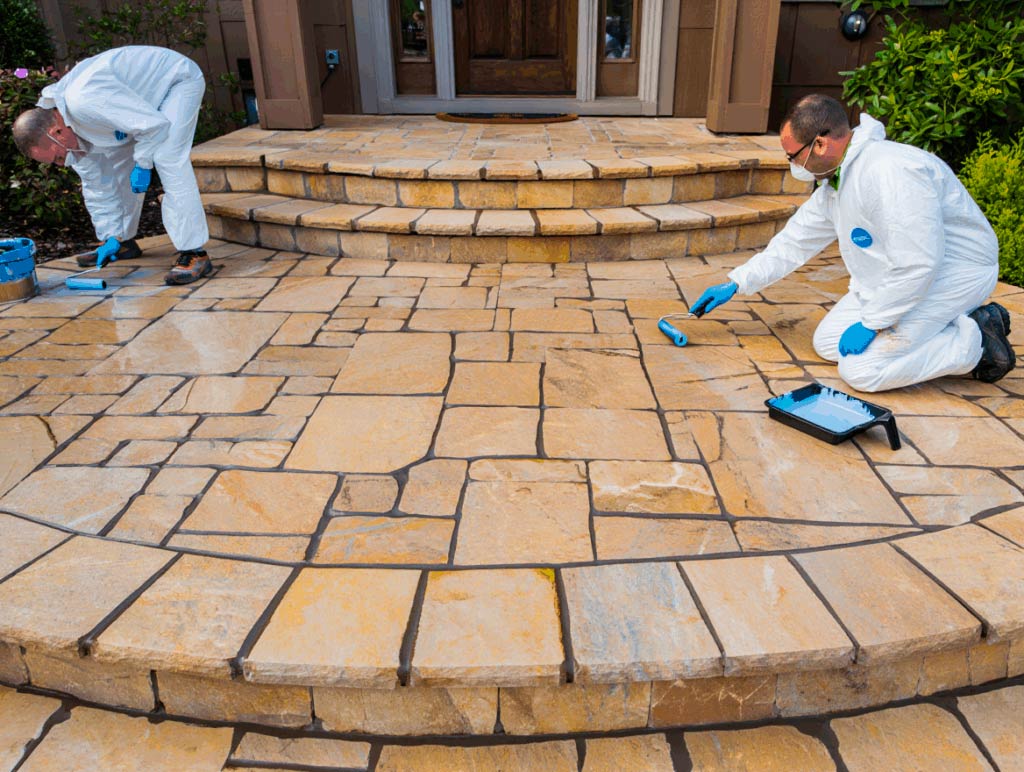
Optimal application procedure
To ensure an effective and long-lasting result, the installation must follow fundamental steps:
- Preparation of the substrate: remove dirt, moisture and damaged parts.
- Restoration of critical issues: close cracks and level surfaces.
- Adhesion primer: improves the seal of the waterproofing product.
- Application of the liquid sheath:
- first uniform coat,
- insertion of reinforcement mesh,
- second covering coat.
- Final inspection: check the continuity of the covering and the protection of corners and drains.
Comparison table of waterproofing solutions
| Solution | Average duration | Costs over time | Application security | Maintenance required | Suitability against mould/infiltration |
|---|---|---|---|---|---|
| Bituminous sheath | 10-15 years | High (frequent interventions) | Low (flame use) | Average | Limited |
| Synthetic membranes | 15-20 years | Average | Media (welded joints) | Low | Good |
| Liquid sheath | 20+ years | Low (long-lasting intervention) | High (without flames) | Very low | Excellent |
How to reduce costs without compromising quality
One of the most frequent concerns customers have is the cost involved. It's true: waterproofing is an investment, but not all projects have the same cost/benefit ratio.
- Economical solutions (bituminous): initial savings, but frequent maintenance and higher long-term costs.
- Advanced solutions (liquid sheath): slightly higher investment, but amortized by the longer life and the almost total absence of maintenance.
- Added value: In addition to the economic savings, you gain in living comfort and health, eliminating mold and humidity from the rooms below.
Practical advice for Gigaterm customers
- Evaluate not only the initial cost, but above all that of life cycle of the intervention.
- Opt for certified and water-based products, safer for the operator and sustainable for the environment.
- Trust in qualified professionals, avoiding do-it-yourself solutions that often lead to higher costs.
- Always ask for a personalized consultancy, because each terrace has unique critical issues.
Conclusions
Terrace waterproofing isn't just a technical job, it's a guarantee of living comfort and cost savings. Leaks, mold, and deterioration aren't inevitable: with cutting-edge technologies like liquid membrane, you can achieve complete, long-lasting protection. Investing in a quality solution today means enjoying your terrace with peace of mind for decades, worry-free and free from unexpected expenses.
Frequently Asked Questions
How long does a terrace waterproofing project take?
Durability depends on the materials used and the quality of the application. With modern solutions, such as liquid membranes or nanotechnology coatings, a well-executed intervention can protect the terrace for over 10-15 years. Proper periodic maintenance further prolongs the performance over time.
Is it necessary to demolish the existing flooring to waterproof the terrace?
Not always. Today, there are systems that allow waterproofing without removing existing tiles or coverings, reducing time, costs, and inconvenience. These cold-applied solutions create a continuous, resistant layer that adapts perfectly to the existing substrate.
How much does it cost to waterproof a terrace?
The cost varies depending on the surface area, the type of material chosen, and the complexity of the project. However, considering waterproofing as an investment is essential: it prevents structural damage, mold, and deterioration, which would otherwise result in much higher costs in the long run. Consulting with qualified professionals helps you find the best solution based on your budget.

Gigaterm is a leading company in the development, production and installation of water-based nanotechnology coatings, designed to offer innovative, sustainable and high-performance solutions.
 English
  Italian